

7 fascinating facts about silverback gorillas
Posted on: 16 July, 2026
The arrival of our new silverback, Nkoumou, at Bristol Zoo Project marks an exciting new chapter for our western lowland gorilla troop.
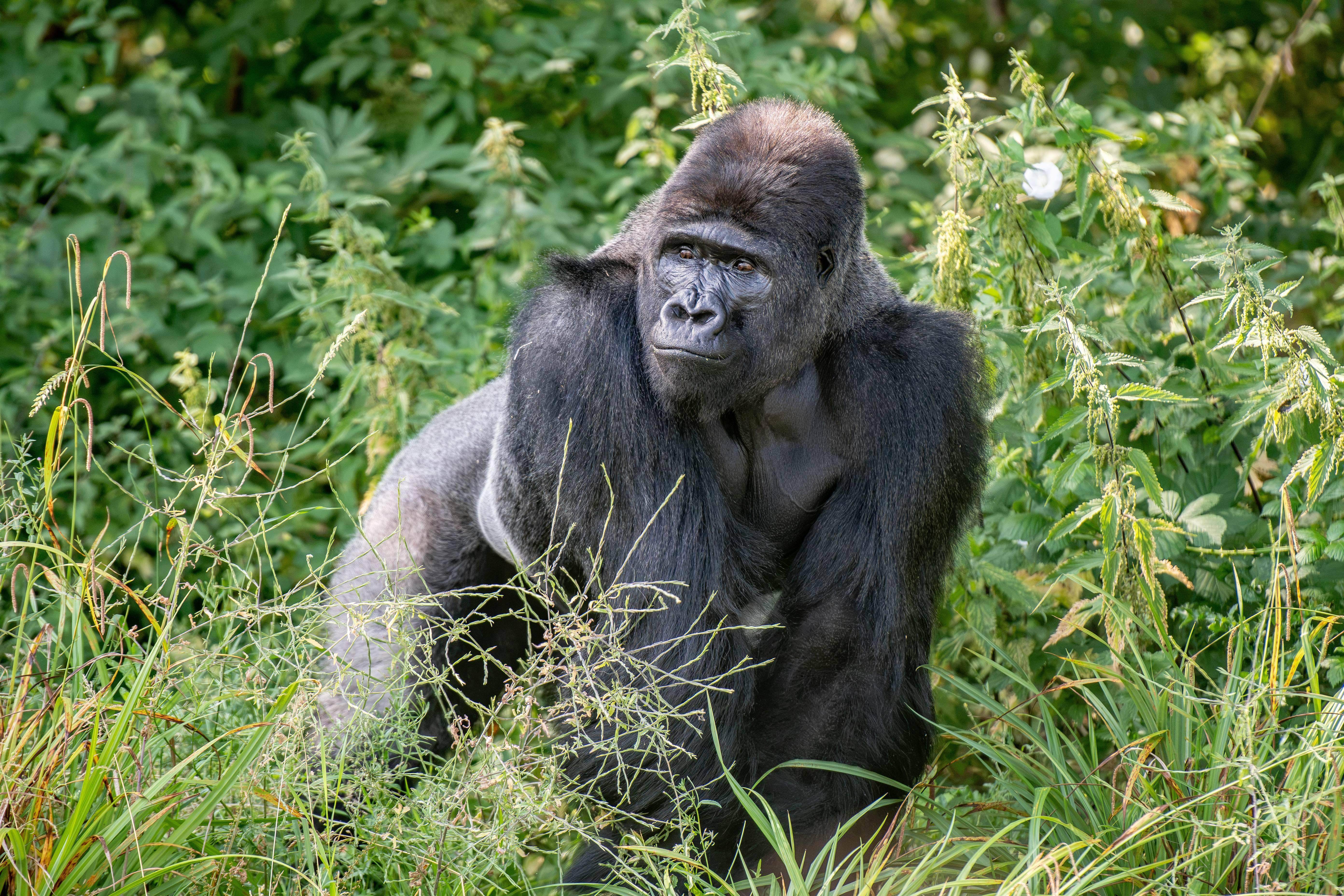 Photo credit: Jon Drew
Fittingly, his name is derived from the Central African word ‘Nkumu’, meaning ‘leader’, with the spelling also honouring his father, Djanghou.
Over the past few weeks our animal keepers have been gradually introducing Nkoumou to the rest of the troop, which comprises three adult females Touni, Kera and Kala, adolescent female Ayana, and juvenile males Juni and Hasani.
Western lowland gorillas live in stable family groups led by a single silverback, so introducing a new male is a gradual process that requires careful planning, patience and expert care. As the troop begins to build trust and establish a new social dynamic, Nkoumou will take on the role of leader, protector and peacekeeper.
So, what does it take to lead a gorilla family? Here are seven fascinating facts that reveal why silverback gorillas are among nature's most extraordinary leaders.
1. They’re the planners of the family
The silverback organises daily life for the rest of the troop.
He decides when the family wakes, where they travel to forage for food, when they stop to rest, and where they sleep for the night. Throughout the day, he also keeps watch over the group, making decisions that help keep everyone safe.
As the dominant male, he's also responsible for resolving disagreements between group members, helping maintain harmony within the troop.
2. They're surprisingly nurturing
Despite their impressive size and strength, silverbacks are known for their calm and tolerant nature.
They are often seen babysitting infants in the group, engaging in play with them, allowing them to climb onto their backs, and caring for them while their mothers feed nearby.
Our former silverback, Jock, was particularly involved in raising his offspring and spent hours patiently playing with them. Through these interactions, young gorillas develop confidence, learn how to behave within the troop and build strong social bonds, making the silverback an important role model as well as the troop's protector.
3. They prefer peace over fighting
Despite a silverback’s obvious physical power, serious fights between gorillas are surprisingly rare.
When two silverbacks encounter one another, they will usually rely on dramatic displays before resorting to physical confrontation. A silverback may stand upright, beat his chest, tear vegetation, throw branches, charge forward and produce deep hoots or roars.
These displays are designed to demonstrate strength and settle disputes without injury. Physical fights are relatively rare, with these displays often being enough to settle disagreements.
4. They communicate in more ways than you might think
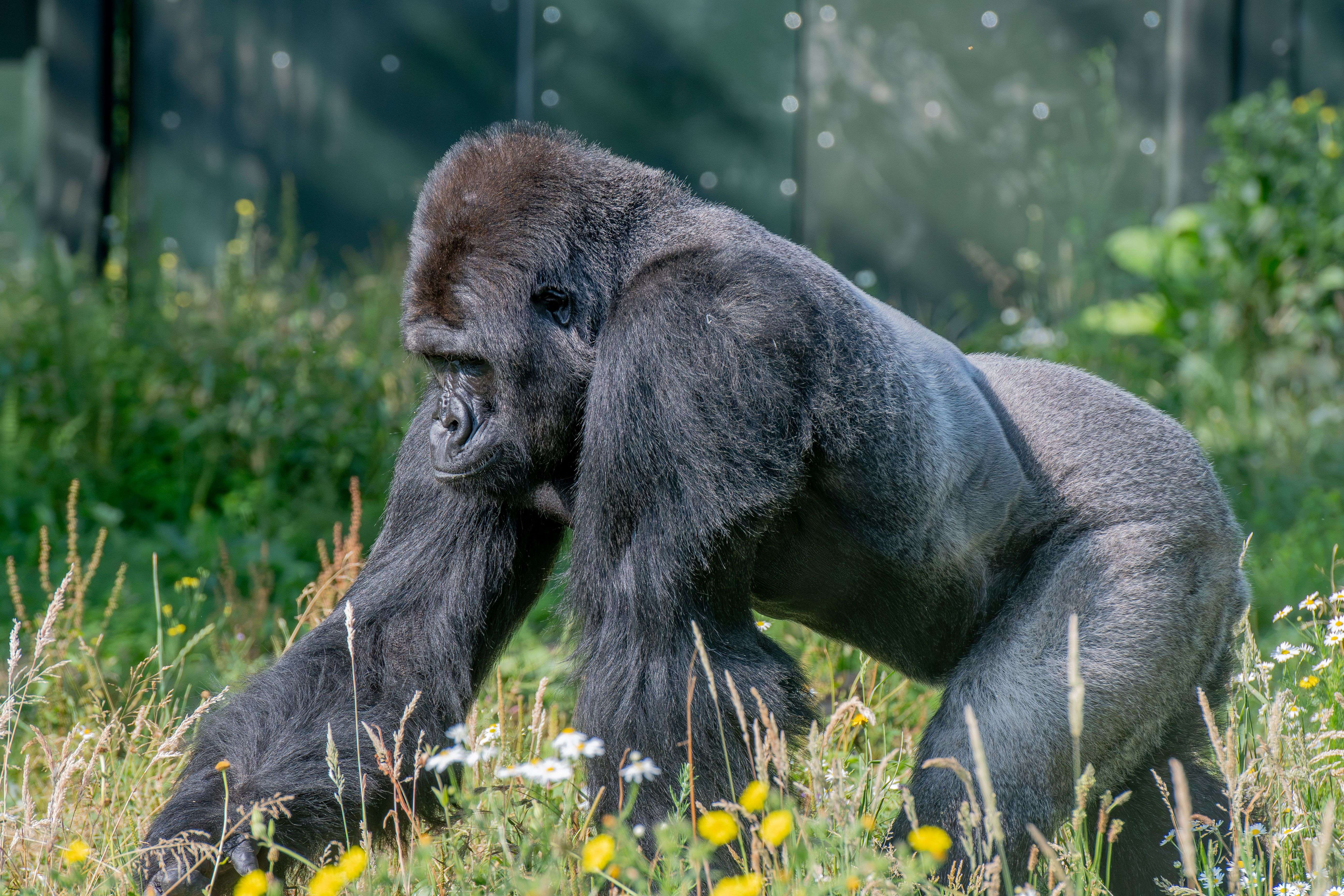
Silverback gorillas communicate using an impressive combination of sounds, gestures and facial expressions.
They use grunts, hoots, barks and roars alongside body posture, eye contact and facial expressions to communicate with other members of the troop. Even their famous chest beat isn't simply a sign of aggression – it can communicate confidence, dominance or help maintain contact with other gorillas through dense rainforest.
5. Their chest beats can travel up to a kilometre
A silverback's chest beat isn't just for show – it's a powerful form of long-distance communication.
Scientists have found that the low-frequency sound produced by chest beating can travel through dense rainforest for up to a kilometre. The rhythm and pitch also reveal information about the individual. Larger silverbacks produce deeper chest beats, allowing other gorillas to gauge a rival's size from a distance and potentially avoid unnecessary confrontations.
Initial weight estimates suggest Nkoumou weighs more than 200kg, meaning he's likely to produce the deep, resonant chest beats associated with larger silverbacks.
6. They know how to defuse dangerous situations
What looks like an attack is often a carefully calculated warning.
If a silverback perceives a threat to his family, he may perform a bluff charge, beating his chest, vocalising loudly, throwing vegetation and charging towards a perceived threat before stopping suddenly. This dramatic display is designed to make the threat back away and create enough space for the troop to retreat safely.
Like many wild animals, gorillas prefer to rely on warning displays rather than physical confrontation. A bluff charge helps the silverback protect his family while giving a potential threat the chance to retreat.
7. They know where every member of the troop is
A silverback is constantly aware of where every member of his troop is and what they're doing.
Throughout the day, he'll keep track of each gorilla, paying particular attention to vulnerable infants and younger members of the group. He watches for signs of illness, injury or conflict, stepping in to reassure individuals, settle disagreements or lead the troop away from potential danger.
This constant vigilance helps keep the family together, ensuring the troop functions as a close-knit unit, and is one of the ways a silverback protects the wellbeing of the group beyond his impressive strength.
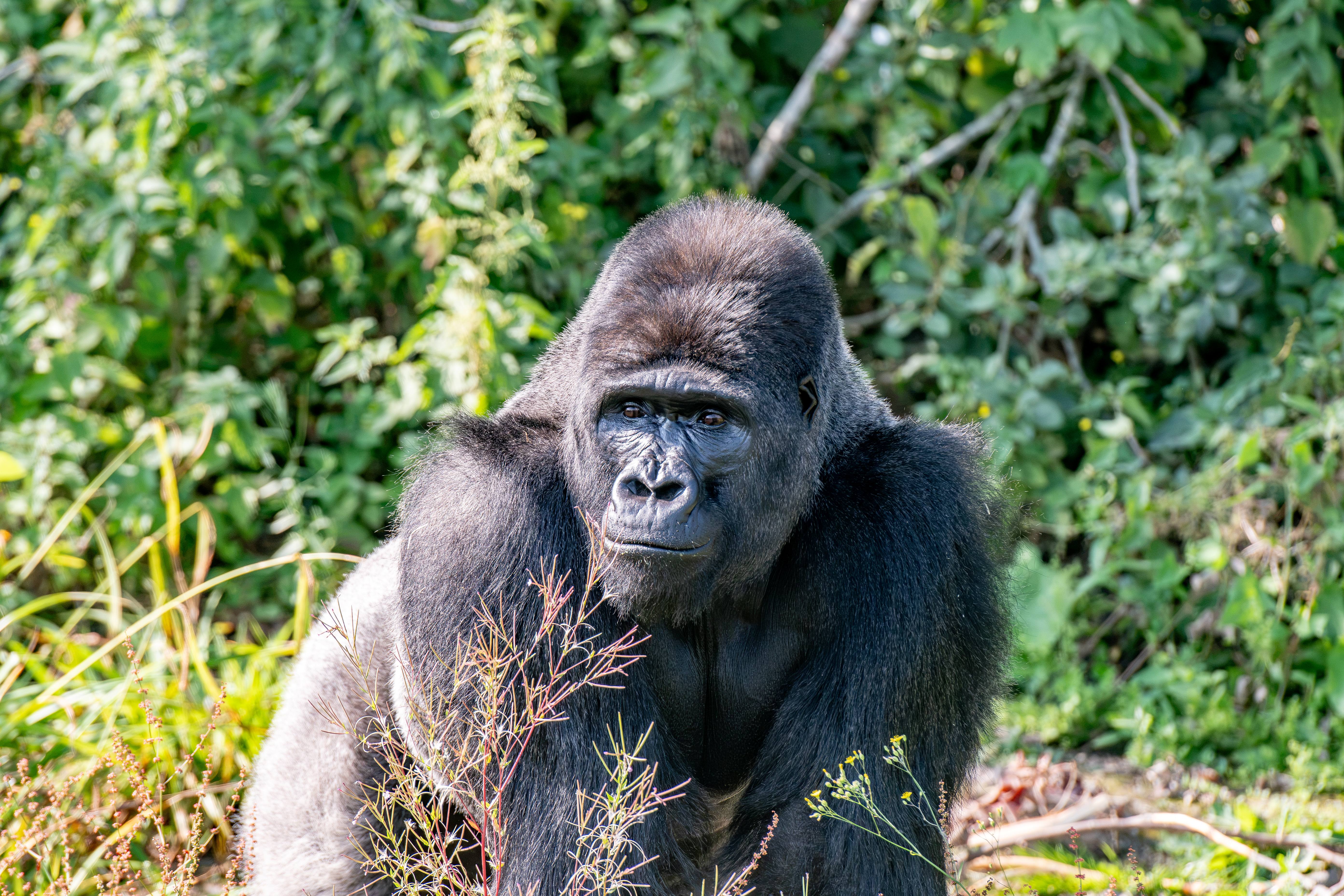 Photo credit: Jon Drew
Helping secure the future of western lowland gorillas
As Nkoumou begins to establish himself as the troop's new silverback, he'll play an important role not only in the future of his family, but also in the long-term conservation of western lowland gorillas.
Western lowland gorillas are listed as Critically Endangered, with populations declining due to habitat loss, disease and poaching.
As part of the EAZA Ex-situ Programme (EEP), Nkoumou's arrival will help maintain a healthy, genetically diverse conservation population of western lowland gorillas, providing an important safety net for the species.
Alongside caring for our gorilla troop in Bristol, we work with partners in Monte Alén National Park, Equatorial Guinea, to help protect western lowland gorillas in the wild through monitoring, community engagement and measures that support peaceful coexistence between people and wildlife. Together, these efforts are helping to secure a future for this Critically Endangered species.