

Bristol Zoological Society secures National Geographic funding
Posted on: 30 June, 2026
We are thrilled to have received funding from National Geographic to advance our important work protecting endangered species and habitats in Kimboza Forest Nature Reserve, located in the Morogoro region of Tanzania! Delivered in partnership with Sokoine University of Agriculture and Tanzania Forest Service Agency (TFS) , this project builds on and strengthens existing conservation initiatives across the region.
This opportunity allows us to shed light on the importance of this small but vital ecosystem, which often goes unnoticed compared to larger forest fragments of the nearby Eastern Arc Mountains. This opportunity will allow us to expand conservation work in the area, preserving and restoring the declining habitat for the protection of the rare and threatened species that inhabit it. This funding marks a landmark moment for BZS’s conservation work in Tanzania.

Turquoise dwarf gecko (Lygodactylus williamsi)
What are we protecting?
At the heart of this project is the micro-endemic and Critically Endangered turquoise dwarf gecko (Lygodactylus williamsi). This elusive species predominantly inhabits an area of forest less than 8 km² and is estimated to have approximately 150,000 individuals remaining, with numbers decreasing. The turquoise dwarf gecko is one of Bristol Zoological Society's six flagship species, and one we are committed to protecting both through our captive breeding programme and our in-situ work in Tanzania.
Our work combines both in-situ and ex-situ conservation to protect the turquoise dwarf gecko. In Tanzania, we focus on in-situ efforts, working directly in the species’ natural habitat to safeguard and restore wild populations. Alongside this, an ex-situ population is cared for and bred at Bristol Zoo Project, where it serves as a vital safeguard against extinction, helps us better understand the species’ needs, and enables visitors to engage with its conservation story.
Together, these integrated approaches form what is known as a One Plan Approach, linking field conservation with zoo-based efforts to maximise the chances of long-term survival for the species.
What threats are facing Kimboza?
Kimboza faces a wide range of threats that include illegal timber harvesting, agriculture, habitat degradation, hunting, mining, and wildfires. The gecko is particularly reliant on a species of native screw pine tree (Pandanus rabaiensis), which is being displaced by the invasive Spanish cedar (Cedrela odorata), posing a serious threat to the survival of the species. Wildfires, often started in adjacent agricultural land or by hunters within the forest, are increasingly common and severe. This compounds the problem further by creating space in the forest that the invasive Spanish cedar is quick to take advantage of, allowing the species to colonise and spread.
Our approach
The focus of this National Geographic-funded project is to safeguard the turquoise dwarf gecko by reducing the spread of invasive species, restoring degraded forest areas, and reducing wildfire impact. Throughout 2027, we aim to kill 50,000 invasive cedar trees and restore 50 hectares of forest. As part of this restoration, we will plant 5,000 native tree seedlings across more than 20 different species to further support the regeneration of the forest. Lastly, we will support the maintenance of 15 km of firebreaks to prevent approaching wildfires. Finally, we will monitor the gecko population responses to our restoration efforts. These efforts build upon existing infrastructure and methodologies, including seedling nurseries and firebreaks established by Sokoine University of Agriculture (SUA), Zoologische Gesellschaft für Arten- und Populationsschutz e.V. (ZGAP) together with a number of supporting European zoos.

Screwpine tree seedlings (Pandanus rabarensis)
Building local capacity
Through this project, we hope to build lasting change by training community staff and students in practical conservation skills. Through hands-on workshops and field training with 150 students from Sokoine University of Agriculture, we aspire to create a new generation of conservationists equipped to care for this forest long after our project ends. By sharing knowledge in seedling growth and invasive tree removal, this project will leave a legacy of habitat restoration that the community can sustain for years to come.
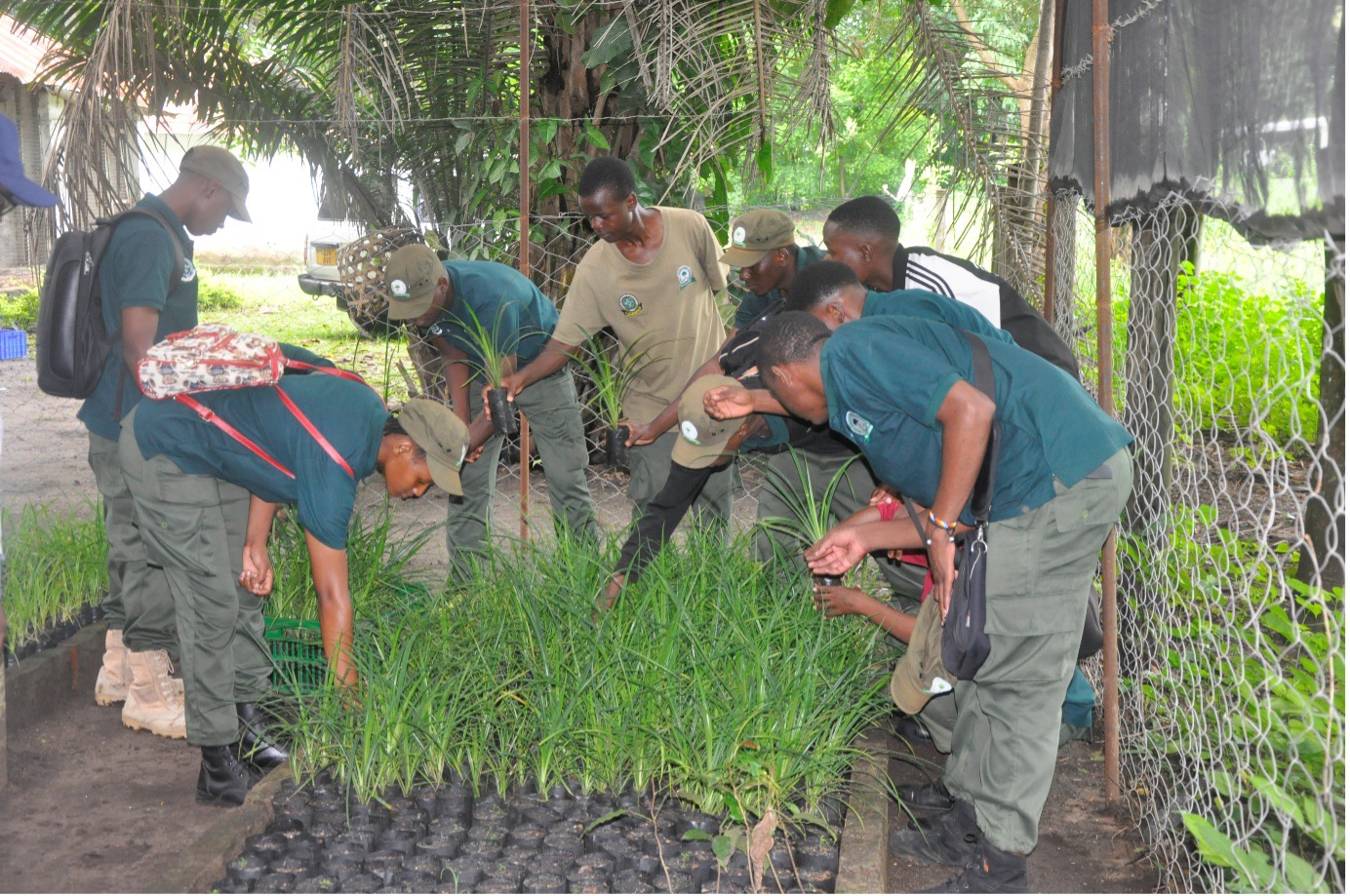
A team of students from Sokoine University of Agriculture is undertaking a workshop in nursery management.
We are incredibly thankful to National Geographic for supporting our conservation efforts in Tanzania and giving us the opportunity to continue this work into 2027. It is through supporters like them that we are able to expand and sustain important work such as this at Bristol Zoological Society.
Written by Oliver Beasley, Programme Lead for Tanzania Conservation, Bristol Zoological Society.